

For Apprentices
Whether you are leaving school, changing career, or already working in the industry, an apprenticeship is a way to get qualified without stopping work or paying tuition fees.
This page covers what one involves, what you will be paid, how to find one, and the support you get from us while you are on programme.
What an apprenticeship is
An apprenticeship is a real job with training built in. You are employed from your first day, you earn a wage, and you work towards a nationally recognised qualification without paying tuition fees.
This page covers what an apprenticeship involves, how to find one, and the support available to you while you are training with us.
We train apprentices across print, packaging, signage and wider manufacturing — from press operators and technicians through to team leaders and senior managers, at levels ranging from Level 2 to Level 7.
Around 400 people are on programme with us at any time, across more than 200 employers. We have been doing this for over 20 years.



Where do you want to start?
-
New to this?
What it involves, what you will be paid, and what you need to get started.
-
Find a vacancy
Live apprenticeship vacancies with employers across the UK, updated regularly.
-
Already with us
Logins, your tutor, and where to get support while you are on programme.
-
Need to talk?
Safeguarding, wellbeing, learning support, or raising a concern with us.

What to expect

You are employed and paid from day one
Apprentices are entitled to at least the apprentice national minimum wage, and most employers we work with pay above it. Once you turn 19 and complete your first year, you move onto the standard minimum wage for your age. You can check the current rates on GOV.UK.
Part of your working week is training time
This is a legal requirement, it happens during paid working hours, and the number of hours is set by your apprenticeship standard.
Your training plan is agreed between the three of you
You, your employer and your tutor agree what you will cover and when, and the three of you review progress together throughout the programme. Nothing is decided about your apprenticeship without you in the room.
A tutor works with you throughout
Regular visits and reviews, plus support building the portfolio of evidence you need.
You finish with an end-point assessment
An independent assessor checks that you can do the job. The assessment methods depend on your standard, and your tutor will take you through exactly what yours involves and prepare you for it. It is graded Pass, Merit or Distinction.
You do not pay for any of it
Training is funded by government, your employer, or a combination of the two.

Common Questions
The things people ask us most before they start. Click a question to see the answer — and if yours isn’t here, get in touch and we will answer it.
Do I need qualifications to start?
Entry requirements are set by the employer, not by us. Most Level 2 and Level 3 roles ask for little or no formal qualification, and weigh attitude and reliability more heavily. Higher levels usually expect relevant experience.
What about maths and English?
If you are 19 or over when you start, you no longer have to achieve Level 2 maths and English to complete your apprenticeship. It is your choice, and funding is available if you want it. If you are under 19 and do not already hold them, they form part of your programme.
Can I do one if I already have a degree?
Yes. Holding a degree or another qualification does not rule you out, as long as the apprenticeship teaches you substantially new skills for the role you are in.
How long does it take?
Between 12 and 30 months depending on the standard. Our qualifications page lists everything we deliver — get in touch and we will confirm the duration for the one you are interested in.
Do I have to go to college?
No. Training is delivered in your workplace and online.
Can I do one if I am already employed?
Yes. Most of our apprentices are existing staff rather than new recruits, and there is no upper age limit.
What happens afterwards?
You hold a nationally recognised qualification. Many of our apprentices progress straight onto the next level — Level 2 to Level 3, or Level 3 into team leadership.
What support is there if I am struggling?
Your tutor is the first person to speak to, and support for additional learning needs is available at any point in your programme, not just at enrolment. There is more on support further down this page.
How do I find one?
Our vacancies page lists what is live now. You can also search the government’s Find an apprenticeship service, which carries vacancies from employers across England.

Read more about it
Two things worth downloading if you are weighing this up — one on the careers available in the industry, one on everything we deliver.


99% of our apprentices would recommend us
96%
say they are treated fairly and with respect by our staff
92%
say we were supportive and flexible during difficult times
1 in 5
gained a promotion while on their apprenticeship
What our apprentices say
“I have learnt many key skills, such as digital and large format printing, large format finishing, and how to use programmes such as InDesign, Illustrator and Photoshop.”
Print Technician apprentice, Level 3
“I have learnt how to run the Xerox machines we have, and my problem solving skills have got better because of the various issues we get.”
Print Operative apprentice, Level 2
“I have been working on pre-press and CAD, which have given me a wide range of knowledge I didn’t have before — new software, and skills like plate making and producing CAD layouts.”
Print Technician apprentice, Level 3
“Things are outlined clearly. Session booking is easy, and I always know when my assessor is on site, what type of session I’m going to have, and what’s being covered.”
Signage Technician apprentice, Level 3
“I have strengthened my communication skills, gained lots more confidence, and improved my time management techniques.”
Business Administrator apprentice, Level 3
“The course content and delivery makes both my Level 5 and Level 7 two of the best courses I have been on.”
Senior Leader apprentice, Level 7
Apprentice Survey 2025

Awards and Recognition
Finishing an apprenticeship is worth marking properly, and the industry has plenty of ways to recognise people who do it well.
Graduation and awards
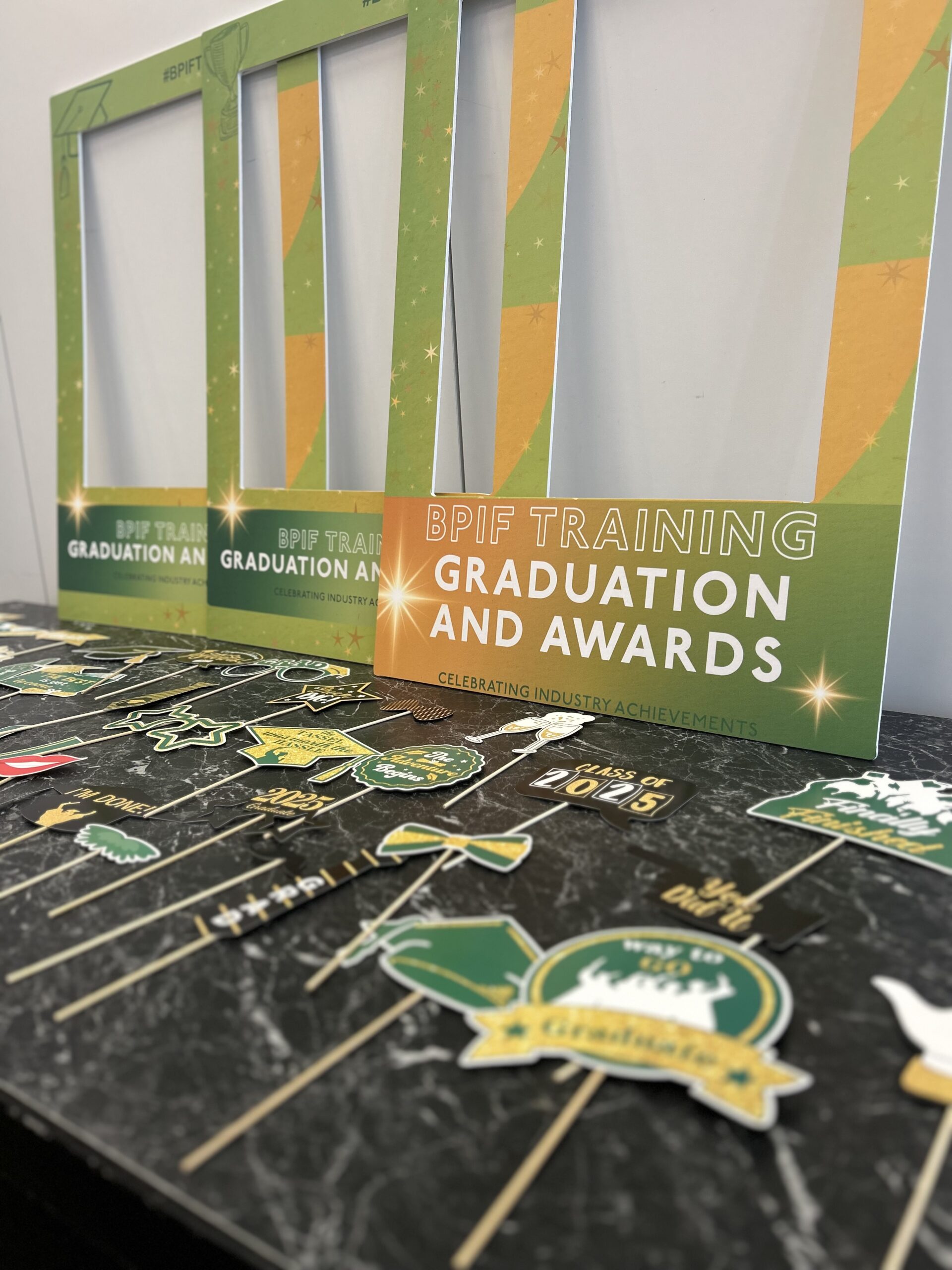
We hold a graduation and awards ceremony for apprentices who have completed their programme, celebrated with family and friends.
PrintWeek Awards
Our apprentices have been recognised in the Best Apprentice category at the sector’s longest-running awards, judged across the whole UK print industry.
Rising Star Awards
Run by The Printing Charity, these awards recognise young talent in the industry and come with a grant to help winners develop their skills and careers.
Kathy Woodward Award for Learning
A £1,000 award, sponsored by Webmart, named in memory of the BPIF’s former chief executive. Presented each year at the BPIF Members’ Day, and any apprentice can apply.
Nominations and applications open at different points in the year. Watch our emails and social media, or ask your tutor — we will tell you when something is open and help you put an entry together.
Learner and employer success stories
What our apprentices have achieved
Business Administrator
Izelda Lala
A Distinction, the Kathy Woodward Award at the House of Lords, and third in Europe at the
Intergraf Young Talent Awards.
Print Technician
Kaden Adamson
Completed his Print Technician apprenticeship in 2025 and won a BPIF Cartons award for the
standard of his work.
Signage Technician
Erin Horsfield
Named Signage Technician Apprentice of the Year at the Sign Industry Awards — while
still on programme.

Get Support
Your tutor is your first point of contact, and for most things they are the quickest route to an answer. But you are not limited to them, and some things are better raised elsewhere.
Safeguarding and learner welfare
If something is affecting you — at work, at home, or anywhere else — you can tell us. That includes bullying, harassment, anything that makes you feel unsafe, and anything you are worried about on someone else’s behalf. You do not have to be certain before you speak up, and you will not be in trouble for raising something that turns out to be nothing.
Talk to our safeguarding team
Email [email protected] or [email protected], or call 01676 526060.
If you or someone else is in immediate danger, always call 999.
These are the people you can talk to. Any of them will listen, and none of them will judge you for getting in touch.


Our policies set out how we protect learners, how concerns are handled, and what we expect from employers hosting apprentices.
Safeguarding and learner welfare policies
Equality and inclusion
Everyone is welcome here. Your background, ethnicity, faith, disability, neurodivergence, sexuality, gender identity, age or caring responsibilities are not obstacles to an apprenticeship with us, and they should never be treated as such by the employer you work for either.
Our job is to remove barriers, not to expect you to work around them. In practice that means:
How we teach
We adapt the way we teach, assess and give feedback to suit how you learn.
What we give you
We adjust resources, formats and deadlines where you need us to.
Where you work
We work with your employer to sort out anything at work that is getting in the way.
How sessions feel
You can ask questions, disagree, and be yourself without being made to feel awkward.
You do not have to explain yourself or prove anything to ask. If something is making your apprenticeship harder than it needs to be, tell us and we will look at what we can change.
We take discrimination, harassment and bullying seriously, whether it comes from our staff, your employer, or another learner. Raise it with your tutor or the safeguarding team above, and we will tell you what happens next.
96% of our apprentices tell us they are treated fairly and with respect by our staff. Where we fall short of that, we want to know.
Learning support
If you have a learning difficulty, disability, health condition or anything else that affects how you learn, tell us and we will put support in place. You can raise it at enrolment or at any point afterwards — it is never too late, and you do not need a formal diagnosis to ask.
Support might mean extra time, different resources, adjustments to how sessions are delivered, or a change to how you evidence your work. What it looks like depends on you.
Complaints and concerns
If you are unhappy with any part of your training, tell your tutor first — most things are resolved quickly at that stage. If that does not settle it, our published procedure sets out how to raise a formal complaint, who handles it, how long each stage should take, and how to appeal if you are not satisfied with the outcome.

Learner logins
The two systems you will use throughout your apprenticeship.
Smart Assessor
Your e-portfolio. This is where your evidence, assignments, feedback and off-the-job hours are recorded, and where you and your tutor track progress.
BKSB
Your maths and English platform. Initial assessments, diagnostic tests and practice materials all sit here.
Can’t get in, or not sure which system you need? Contact your tutor, or email [email protected] and we will sort it out.
Ready to start?
Browse the vacancies we have live now, or get in touch and we will talk through the options with you. If you are already working in the industry and want the skills you have recognised, an NVQ may be the better route.